|
  Alternatives
to petroleum are catching on around the globe Alternatives
to petroleum are catching on around the globe
August 22, 2005 -
www.redherring.com
Fueling the Biodiesel Fire
Alternatives
to petroleum are catching on around the globe, and Arab sheiks,
Texas truckers, and Chinese restaurateurs are jumping on the
biodiesel bandwagon.
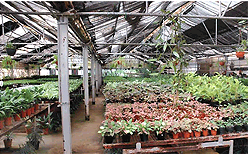 |
Labland
Biotechs green house, where
jatropha and other 'plants of economic
importance are grown and studied'. |
Some time next year, a
small biotech laboratory in the southern Indian town of Mysore will
start supplying millions of Jatropha saplings to the arid countries
of the Persian Gulf.
The inedible oilseed
plants will be used to produce biodiesel in countries such as Saudi
Arabia, one of the world's most oil-rich nations.
Halfway across the
globe, Texas is also showing a new interest in diesel fuel made from
the low-grade dregs from rapeseed, soy, corn, and other vegetable
oil presses, called acid oil foot, or the "yellow grease" left
over from restaurant cooking or food processing plants.
One truck stop about an
hour south of Dallas, called Carl's Corner, has foregone petroleum
diesel altogether in favor of biodiesel. In the United
States-where the trucking industry uses more diesel than any
other-the federal government, Texas truckers, and even country
singer Willie Nelson are singing the praises of biodiesel as an
alternative to, or a blend with, petroleum diesel.
China has also started
to embrace biodiesel, including a variety made from oily sewage
sludge.
While no one doubts
that the oil and gas industry will continue to rack up staggering
profits in the foreseeable future, governments around the world are
encouraging the introduction of biodiesel into their transport fuel
mix to reduce harmful carbon dioxide emissions, improve air quality,
and lessen dependence on imported fuels. And everyone from Arab
sheiks to American rednecks is heeding the call.
Although heavily tilted
toward the oil and gas industries, the new energy bill passed by the
U.S. Congress at the end of July will also provide funding for
bio-based fuels such as biodiesel. The bill extends a tax incentive
for biodiesel from 2006 to 2008, requires the use of 7.5 billion
gallons of ethanol and biodiesel by 2012, and provides $200 million
annually until 2015 to boost biofuel research and development.
Widely fluctuating
global crude prices have started to destabilize India's balance of
trade, so the Indian federal government is considering a national
biodiesel policy mandating the production of 13 million tons of
alternative fuel every year, resulting in an estimated savings of
$4.6 billion annually in crude oil imports.
China plans to impose a
new government law next year that will mandate support for
production and application of biofuels and require fuel distribution
companies to incorporate biofuels into their existing sales
systems.
The European Union
biofuels directive requires a minimum level of biofuels as a
proportion of fuels sold in the E.U. of 5.75 percent by 2010 and 20
percent by 2020.
Top
Next
|


 2006 M/s Labland Biodiesel (India) Private Limited










